Hey, awesome people.
There is a precise moment around 2:45 PM on a Tuesday when the corporate spreadsheet starts to feel like a personal insult.
Your eyes burn against the cold fluorescent glare of your monitor, your inbox is pinging with yet another “per my last email,” and you find yourself staring blankly at a tiny silk ribbon tied around your iced coffee cup. The ribbon is delicate, soft, and entirely useless in a capitalist framework—and that is precisely why you love it.
Lately, the internet is overflowing with a quiet, collective confession: I don’t want to be a girlboss anymore. I just want to be a ribbon.
                       🎀 🎀 🎀
      "I don’t want to build an empire.
       I want to drink tea out of vintage porcelain,
       wear lace, and never look at a quarterly KPI again."
It is easy to see why this feeling has taken hold. A decade ago, we were sold a very specific flavor of empowerment: the era of the high-heeled, rise-and-grind Girlboss. We were told that the ultimate feminist triumph was climbing the corporate ladder, leaning into 60-hour workweeks, and commodifying every waking hour of our youth until we earned a seat at the boardroom table.
Predictably, that promise turned out to be a trap. Replacing male exploiters with female ones didn’t liberate us from the grind—it just gave the grind a pastel coat of paint.
Now, the pendulum has swung violently in the opposite direction. Enter the rise of coquette, soft-girl, and “retiring from the workforce” aesthetics. On the surface, swapping sharp blazers for delicate lace and romanticized leisure feels like a radical rejection of hustle culture. It’s a sensory refuge from a sterile, alienating world that demands our constant productivity.
But as comforting as it is to retreat into a world of pink bows and soft-focused romance, we have to ask ourselves an uncomfortable question: Is wanting a ‘soft life’ an act of genuine resistance, or is it just an aesthetic escape pod for the privileged few?
The Death of the “Girlboss”
To understand why so many of us are suddenly yearning to drape everything in lace and retreat from public life, we first have to talk about the lie we were sold ten years ago.
In the mid-2010s, mainstream feminism underwent a glossy, corporate rebrand. Armed with neon signage, oversized coffee mugs, and an unshakeable faith in free-market capitalism, the Girlboss arrived on the scene.
┌─────────────────────────────────────────────────────────┐
│              THE GIRLBOSS FORMULA (Circa 2015)          │
│                                                         │
│  Structural Inequality  +  Pink Blazer  =  "Empowerment"│
│  Exploitative Labor    +  Overtime      =  "Hustle"     │
└─────────────────────────────────────────────────────────┘
The pitch was deceptively simple: systemic sexism could be defeated if individual women just worked harder, optimized their mornings, leaned into boardroom meetings, and built their own empire. Empowerment was measured by your credit limit, your title, and how efficiently you could commodify your time.
The Corporate Illusion
For a moment, it felt like progress. But girlboss ideology wasn’t designed to dismantle an oppressive system—it was designed to assimilate us into it.
It took the sharp, collective teeth out of historical labor movements and replaced them with individual ambition. It told working-class women that if they were tired, underpaid, or burned out, it wasn’t because capitalism was inherently exploitation-driven—it was simply because they hadn’t “manifested” their promotions or woken up at 5:00 AM to execute a 12-step routine.
       "Girlboss ideology didn't free us from the grind—
        it just demanded we put a bow on it and pretend to enjoy it."
The Breaking Point
The fundamental flaw of the girlboss era eventually revealed itself: putting a woman at the top of an exploitative ladder doesn’t make the ladder any safer for the people standing at the bottom. A female CEO under late capitalism is still incentivized to keep wages low, suppress unions, and prioritize quarterly growth over human well-being.
By the time the global workforce hit a wall of collective burnout, the illusion completely shattered. Women realized that “leaning in” only resulted in leaning straight off a cliff of exhaustion. We didn’t want to conquer the rat race; we wanted out of the maze entirely.
And so, the pink blazer was tossed aside. But what replaced it?
Softness as a Reaction to Alienation
When the corporate myth collapsed, it didn’t just leave us exhausted—it left us feeling deeply disconnected.
Enter the coquette revival. On its surface, the aesthetic is all about hyper-feminine nostalgia: sheer organza, pearl strings, faded ballet slippers, hand-written letters, and silk ribbons tied onto everyday objects. But if you look past the pastel surface, the sudden obsession with these textures isn’t accidental. It is a direct, visceral recoil against the cold, sterile realities of modern work.
   STERILE CORPORATE WORLD              COQUETTE SENSORY REFUGE
┌───────────────────────────┐        ┌───────────────────────────┐
│ • Cold glass and steel    │   VS   │ • Soft lace and silk      │
│ • Seamless digital screens│        │ • Tactile, vintage weaves │
│ • Speed, metrics, output  │        │ • Unhurried, quiet beauty │
└───────────────────────────┘        └───────────────────────────┘
The Heavy Weight of Alienation
In socialist theory, Karl Marx talked about alienation—the hollow feeling that happens under capitalism when our labor is stripped of meaning. We spend forty-plus hours a week generating value we never see, creating abstract “deliverables” for nameless entities, completely separated from our own time, creativity, and physical bodies.
Modern white-collar and gig work has only accelerated this feeling. We live in an environment built around friction-free efficiency: flat corporate branding, slick smartphone glass, gray open-plan offices, and endless digital noise. Everything is optimized for speed, output, and monetization.
Under these conditions, your body becomes little more than a mechanism to transport your fingers to a keyboard and your eyes to a screen.
Alienation (n.): The state of being disconnected from the work you do, the world you inhabit, and the full expression of your own humanity.
                       🌸 🌸 🌸
      "Coquette isn't just a look; it’s a tactile rebellion.
       It is the urge to feel something soft, real, and
       beautiful in a world built out of cold plastic and code."
The Sensory Refuge of the Bow
This is where the coquette aesthetic steps in as a sensory sanctuary.
Where late-stage capitalism demands speed, coquette demands slowness. Where corporate aesthetics favor functional gray minimalism, coquette demands playful, impractical ornament. Tying a ribbon around an iced coffee or choosing a dress with intricate eyelet lace requires you to stop, touch, feel, and appreciate a physical object purely for its beauty—not its efficiency.
It brings us back into our bodies. It reclaims playfulness and delicacy in a culture that treats anything soft or unproductive as worthless.
Wanting to fill your home with vintage porcelain, wear soft cotton, and spend an afternoon doing nothing more demanding than sitting in the sun isn’t “lazy.” It is your mind and body screaming for relief from a system that views human beings as nothing more than fuel for a machine.
Coquette acts as a Trojan horse: behind the delicate bows lies a profound, human desire to feel whole again.

The Trap of Individual Escapism
As restorative as it feels to retreat into a sanctuary of silk ribbons and slow living, we have to confront an uncomfortable reality: under late capitalism, even our escapism gets put up for sale.
The moment the algorithm realized millions of young women were exhausted, “soft living” was quickly packaged, branded, and sold right back to us.
┌─────────────────────────────────────────────────────────────┐
│                 THE SOFT-GIRL COMMODIFICATION CYCLE         │
│                                                             │
│  Burnout → Seek Relief → Buy $80 Candle & $200 Silk Robe →  │
│  Run Out of Money → Back to the Grind to Pay the Bill       │
└─────────────────────────────────────────────────────────────┘
Suddenly, escaping the relentless grind required a credit card. Influencers on TikTok and Instagram began framing “softness” not as a mental boundary or a political stance, but as a luxury lifestyle—one lined with $300 linen sheets, $80 ceramic mugs, and endless hauls of polyester lace tops from ultra-fast-fashion apps.
The Escape Pod for One
This is where the “I just want to be a ribbon” mindset hits a dangerous snag. When our response to systemic burnout is purely individual—“I just want to find a wealthy partner,” “I just want to quit and become a stay-at-home trad-wife,” or “I just want to earn enough to opt out”—we aren’t actually dismantling the system.
We’re just trying to build a golden escape pod for ourselves.
       "If 'soft living' is a privilege reserved only for those
        who can afford it, then it isn't liberation—it's just leisure
        funded by someone else's un-soft labor."
Who Pays for Your Softness?
The hard truth of a capitalist economy is that individual softness often relies on invisible, un-soft labor behind the scenes:
- The delicate coquette dress you bought online was likely sewn by an underpaid, overworked garment worker in the Global South working 14-hour shifts under brutal conditions.
- The artisanal oat milk latte adorned with a cute ribbon was handed to you by a service worker who can’t afford rent, let alone a “soft life.”
- The dream of opting out of the workforce entirely relies on someone else bearing the burden of a brutal, exploitative labor market on your behalf.
If our vision of freedom ends at our own bedroom door, we haven’t escaped the logic of capitalism at all; we’ve just adopted a prettier version of consumer individualism.
Wanting peace, beauty, and rest isn’t the problem—the problem is accepting a world where only a few are allowed to have it.
Bread, Roses, and Pink Ribbons
So, where does that leave us? Must we throw away our lace, burn our silk ribbons, and adopt an austere, utilitarian life to be “good” anti-capitalists?
Absolutely not.
The idea that working-class people should only care about survival—that beauty, romance, and play belong strictly to the wealthy—is one of the oldest lies of the ruling class. We don’t need to abandon our love for softness. We just need to remember where its political roots actually lie.
┌─────────────────────────────────────────────────────────────┐
│               THE 1912 LAWRENCE TEXTILE STRIKE              │
│                                                             │
│       "The worker must have bread, but she must have        │
│                         roses, too."                        │
└─────────────────────────────────────────────────────────────┘
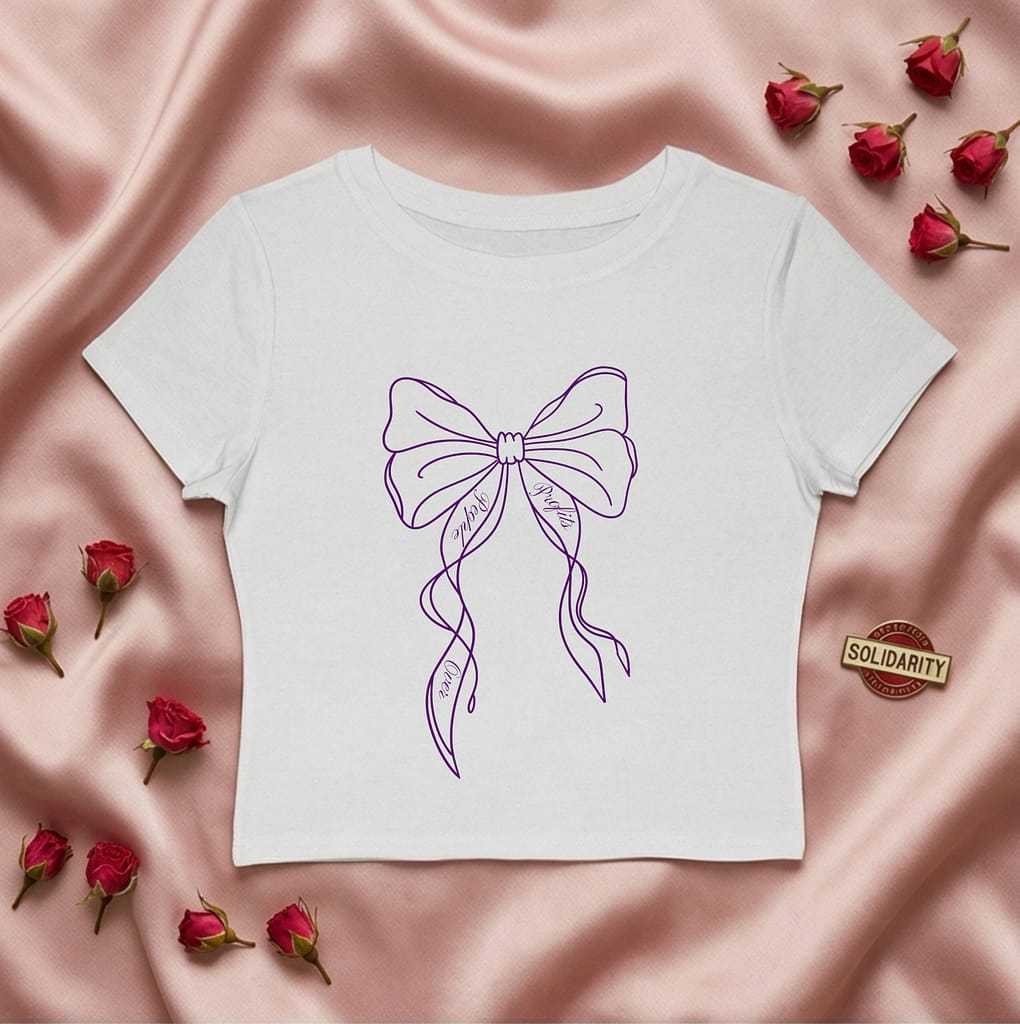
In 1912, thousands of immigrant women workers—many of them young garment workers facing brutal factory conditions in Lawrence, Massachusetts—walked off the job in what became known as the historic Bread and Roses Strike.
Their slogan wasn’t just a demand for higher wages to buy food (bread); it was a bold declaration that working women deserved dignity, leisure, art, and joy (roses). They refused to accept an existence that reduced human life to mere physical survival and continuous labor.
Reclaiming the Rose
The coquette aesthetic, at its best, is modern culture’s quiet cry for roses.
Wanting your life to feel delicate, poetic, and beautiful isn’t a frivolous bourgeois distraction. It is a fundamental human need. The mistake is thinking that beauty is something we must individually buy or earn through corporate climbing, rather than a universal right we must collectively demand.
       "Real coquette energy isn't buying twenty polyester
        bows off an app; it is recognizing that softness, rest,
        and beauty are things every single worker deserves."
From Soft Escapism to Collective Liberation
The next time you find yourself staring at your laptop screen at 2:45 PM, overwhelmed by the sterile, relentless machinery of modern work, don’t feel guilty for wanting to retreat into a world of pink ribbons and quiet tea cups. That exhaustion is real, and the desire for softness is valid.
But don’t let that feeling end in an online shopping cart or a fantasy of isolated escape.
                        🎀 🎀 🎀
      Instead of using softness as a hideout from the world,
      let's use it as the standard for the world we want to build.
We don’t need a return to the exhausting myth of the Girlboss, nor do we need a passive withdrawal into private luxury. We need collective softness—the kind won through unionizing our workplaces, fighting for 32-hour workweeks, demanding living wages for garment workers worldwide, and building communities where rest isn’t a luxury item but a shared guarantee.
Wear the lace. Tie the silk ribbon in your hair. Cherish the vintage porcelain. But hold onto the radical truth underneath it all: We don’t just want to survive the grind. We want bread, we want roses—and we are going to win them together.
Check out Great Lakes Sparkle in the Etsy shop!